

Nuclear Monitor #938
Jan van Evert
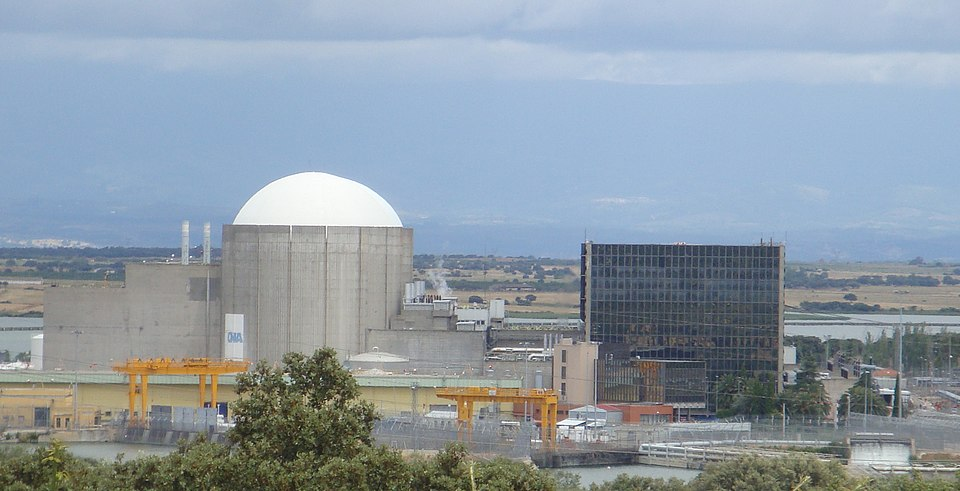
The Almaraz Nuclear Power Plant (Wikipedia)
A report published by Greenpeace Spain has shown that it is cheaper to shut down the Almaraz nuclear power plant than to continue its operation. The results show that the planned closure of Almaraz is also technically feasible and environmentally sound.
The nuclear power plant in Almaraz, about 200 kilometres west from Madrid, consists of two 1000 MW reactors and has been in operation since 1983. Spain has in total seven nuclear reactors that were all built in the eighties. They represent almost twenty percent of the total Spanish electricity production. In 2019 an agreement was signed to shut down all nuclear reactors in Spain between 2027 and 2035. In October 2025 the owners of the Almaraz plant have applied for an extension of the operation until 2030, so that both reactors can be shut down simultaneously. This is longer than the originally planned lifespan of forty years for the reactors.
The Greenpeace report has shown that there is no evidence of a structural dependence on gas associated with the closure under the terms currently agreed. Moreover, the extension of Almaraz would significantly delay the introduction of new renewables and storage capacity.
Furthermore, the closure of Almaraz makes it possible to reduce the 3,8 TW of renewable energy that is lost previously. That is approximately half the annual electricity generation of a nuclear reactor in Spain. The analysis by Greenpeace is based on detailed hourly simulations.
The extension of Almaraz will lead to a temporary reduction in gas consumption between 2028 and 2030, but will result in a system that is structurally less renewable from 2030 onwards. This will result in higher CO2 emissions. The extension also provides temporary relief both in the average price of electricity and in electricity bills between 2028 and 2030, but from 2031 onwards it will lead to a sustained increase in both metrics.
An analysis of recent reports published by other organisations supports these conclusions. Where the extension of the Almaraz plant offers minor temporary economic and climate benefits in the period 2028–2029, but net negative effects of a greater magnitude from 2030 onwards.
To read the full report (Spanish only)
https://es.greenpeace.org/es/wp-content/uploads/sites/3/2026/02/Informe-cierre-Almaraz-pag.pdf